
In this article, we intend to discuss what rebar cutting tools are and explore the various methods of cutting rebar. Stay with us until the end of the article.
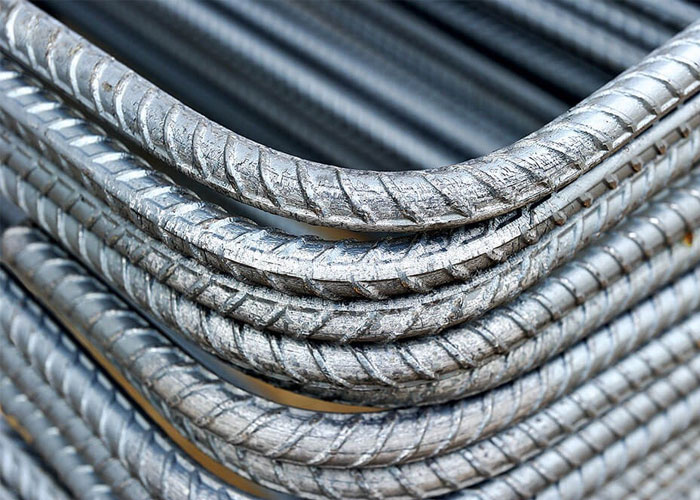
Rebar is one of the most widely used materials in the construction industry, playing a vital role in the structural configuration of buildings. Sections consisting of circular steel with different diameters and widths are called rebar. Rebar can be produced with various initial compositions, which affects the price of alloy rebar. This product is manufactured in two types: plain and deformed (ribbed). Rebar is produced with standard diameters ranging from 6 to 60 mm. Individuals requiring large-diameter rebar must order it specifically from their preferred manufacturer. Rebar is mostly produced in 12-meter lengths, although rebars under 10 mm can also be purchased in coils.
International Rebar Standards
Several different standards are used in rebar production. These standards have been established by international organizations, with the most reputable ones being:
-
ASTM: American Society for Testing and Materials, with the ACI (318-14) code associated with this organization.
-
JIS (Japan): Which declared the JIS G3112 standard for rebar used in concrete.
-
DIN (Germany): The DIN 488 standard regarding steel used in reinforced concrete.
-
ISO: International Organization for Standardization, which authored ISO 6935 for steel. British, Canadian, American, and Australian standards are also references for rebar production companies.
Rebar Standards in Iran
In Iran, the Esfahan Steel Company (Zob Ahan), as a pioneer in the steel industry, originally used Russian standards for rebar production. However, other standards are also used during production stages in the country:
-
Russian Standard
-
ISIRI 3132 Standard
-
DIN Standard
What criteria are examined in determining rebar standards?
The first check of a rebar standard examines its physical appearance. Each manufacturing plant produces its rebar with a specific nominal diameter and length, from which the rebar weight table is derived. This table varies between companies based on different standards. One application of these tables is to determine the packaging weight of rebars after production, known as a rebar “bundle.”
Rebar Cutting Methods and Tools
Rebar cutting involves both Cold Cutting and Hot Cutting methods. These methods are used for cutting all types of rebar with various thicknesses. The difference, as the names suggest, lies in the use or absence of heat. Depending on the conditions, the appropriate tools for each method also differ.
Rebar Cutting Using Cold Methods
In these methods, heat is not used to cut the rebar. This ensures that the structure and properties of the rebar do not change during the process, resulting in higher quality. Advantages include the ability to cut rebar into identical pieces, preventing the production of hazardous gases, and reducing waste. Despite the higher cost of tools and maintenance, this method is most common and cost-effective for large-scale projects.
Cold Cutting Tools:
-
Manual Hacksaw: The most basic tool, suitable for thin rebars and minor use.
-
Angle Grinder or Circular Saw: Used for continuous work in ironware workshops and medium-sized construction projects. They offer good safety and high-quality cuts.
-
Shears: Available in manual and hydraulic types. Manual shears are for thin rebars, while hydraulic shears (powered by hand or electricity) can cut rebars up to 35 mm thick.
-
Guillotine: A semi-automatic machine for high-thickness rebars (up to size 40). It requires a skilled operator and is used for heavy-duty, less precise cutting.
-
Band Saw: A modern, fully automatic tool with high precision. It does not require an operator, can be programmed, and allows for angled cuts.
Rebar Cutting Using Hot Methods
In hot methods, direct heat is used to bring the rebar to its melting point to separate it. While fast, this method has many disadvantages: production of toxic gases, high rebar damage, changes in structural properties, and lower precision.
Hot Cutting Tools:
-
Oxy-Fuel Cutting (Torch): Uses compressed air and a special torch to melt the rebar. It has the lowest precision and speed.
-
Friction Saws (Ateshi): A high-speed rotating disc that generates intense heat. While fast, it is extremely dangerous due to the risk of the blade breaking, and its use has significantly decreased.
-
Laser Cutting: The most precise hot method. Laser heat melts the rebar with high control, resulting in less structural damage and lower waste compared to other hot methods.
About This Group
With over thirty years of experience and utilizing modern machinery, this group combines experienced personnel with technical engineers to support national development. Initially entering the field with rebar cutting machines, the group now produces over twenty models of machinery, including rebar benders, stirrup benders, zigzag machines for trusses, and dual-purpose machines, playing a vital role in supplying construction contractors.