
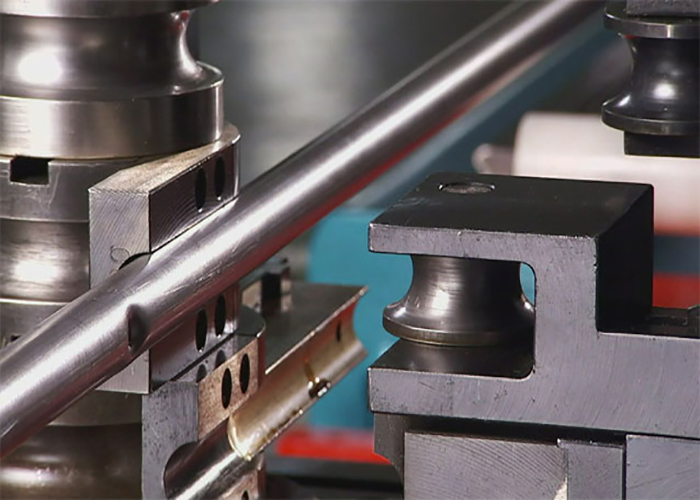
Rebar Bending and Cutting Shears
Rebar bending and cutting shears are also known as rebar benders or rebar cutters. The most important components of these shears include the electric motor, hydraulic pump, cylinder (jack), manual valve, hydraulic hose, wheels, body, and the machine base.
Bending and Cutting Mechanism in Hydraulic Rebar Shears
Bending and cutting rebar requires high power. In machines designed for high-diameter rebar, this power is provided by a hydraulic system. In the motor selection section, a Chinese electric motor is considered by default. Both single-phase motors have a power consumption of 2.2 kW and produce 3 horsepower to apply force to the hydraulic pump. By moving the manual valve, the hydraulic cylinder begins to operate. The cylinder’s force can result in either bending or cutting the rebar, depending on its position.
Features of Rebar Bending and Cutting Shears
-
The chassis dimensions are standard, and user convenience has been considered in the design.
-
The paint quality and coating of the iron body components are high, significantly protecting the body from sun and water exposure.
-
Single-phase electrical system.
-
First-rate ringed hydraulic cylinder.
-
High-pressure hoses and premium fittings.
-
Equipped with two carbon-coated cutting blades.
-
Equipped with two “Peykan” style wheels (stock) for ease of transport.
Applications of Bending and Cutting Shears
Wherever there is a need to cut or bend rebar, rebar shears are used. Rebar is a steel product made from a combination of iron and carbon; the higher the carbon content, the harder, more brittle, and fragile it becomes. In such types of rebar, bendability may be difficult. Therefore, obtain sufficient information about the rebar before starting work with the machine. The application of Maral rebar bending and cutting shears is very broad. Reinforcement (weaving rebar to overcome the tensile force of concrete), building foundation execution, floor ceiling execution, road construction, and bridge construction are some of the use cases for this machine.
Types of Rebar Bending and Cutting Machines and Shears
-
Size 32 Rebar Bending and Cutting Machine: This machine comes in two types: foot pedal and manual lever valve, both of which can be used in different projects. Additionally, this type can operate with both three-phase and single-phase electricity.
-
Size 28 Rebar Bending and Cutting Machine: This type is only available in a single-phase model with small industrial wheels and is equipped only with a manual lever valve system.
-
Size 25 Rebar Bending and Cutting Machine: This machine has the power to cut size 25 rebar and is used for small projects.
-
Mechanical Rebar Cutter: This machine does not use a hydraulic system; instead, it utilizes a gearbox system. Its speed is higher than the hydraulic type, but it has lower cutting power and higher wear and tear.
-
Portable Rebar Cutter: These cutters only have the capacity to cut rebar up to size 25 and are imported models. They weigh a total of 13 kg.
-
Manual Bending and Cutting Tools: In some cases, due to a lack of facilities or electricity, powered machines cannot be used. Therefore, Techno Sanat has produced manual rebar benders and cutters so that customers are not left without tools in these situations.
Pricing of Bending and Cutting Machines and Shears
Various parameters affect the price of bending and cutting shears, including:
-
The type and thickness of the body used for the machine.
-
The type of oil used in the cutter.
-
Plating of the components.
-
Type of wheels used (new or stock).
-
Welding tools and techniques.
-
Electric motor brand.
-
Use of oil filters and lubrication networks.
-
The coupling between the electric motor and the pump.
-
The diameter and stroke length of the hydraulic cylinder.
-
The warranty provided by the company.
Selecting Rebar Shears
-
Choose the appropriate rebar cutter based on access to single-phase or three-phase electricity.
-
Ensure the quality of the blades, edges, hydraulic unit, motor power, and hydraulic pump.
-
It is better to choose a rebar cutter size one step larger than the rebar being used.
-
This machine has high erosion and wear; therefore, purchasing a second-hand rebar cutter is not recommended.
-
The dimensions of the rebar bending and cutting shears are a very important factor to ensure no issues occur during transport.